
My Story
From Therapy to Coaching (Short Version)

Karen Yeh, J.D., M.A., LMFT
License # LMFT121420
Ask a million “coaches” the difference between coaching and therapy, get a million answers. Here’s mine.
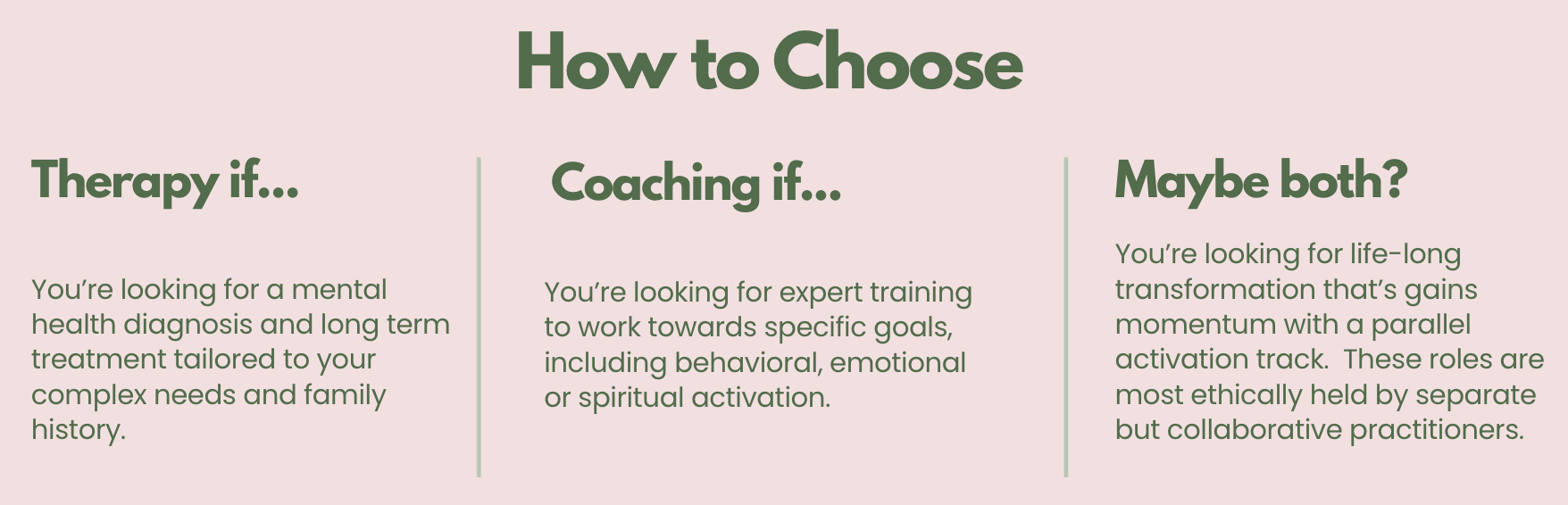
Therapists build a relationship with you for months and years to find the root causes of your symptoms and tailor their interventions to your complex needs. It is a beautiful, long and winding process. In contrast, as your coach, I help you identify specific, discrete symptoms, create clear goals and give you tools you need to meet those goals as quickly as possible. My work is short term, driven by action and complementary/supportive of a therapeutic practice.
I have been a software engineer, a patent litigator and then a DBT therapist for ten years specializing in Borderline Personality Disorder, Narcissistic Personality Disorder, C-PTSD and other versions of severe emotion dysregulation.
My Story
From Therapy to Coaching (Long Version)
Ask a million “coaches” the difference between coaching and therapy, get a million answers. Here’s mine.
Modern psychotherapy has taken on the medical model, for better or worse. You go into a therapist’s office, tell them your symptoms and they diagnose you with a root cause: a traumatic event, intergenerational trauma, imbalanced brain chemistry, etc. Based on their diagnosis, they begin treatment whether it includes a referral to a psychiatrist for medication, a regimen of exposure therapy or an emotionally corrective therapeutic relationship and walking through your family history. This work is beautiful and I treasured my ten years as a therapist sorting through root causes and loving my clients through their transformations.
And then I got sick with an illness that has no known root cause. My life took on two parallel tracks. On one track, I utilized the standard medical system, starting with my General Practitioner and then specialists, until finally landing at a specialty clinic where I had to test out various treatments one at a time, slowly and methodically, to rule out each potential root cause, in a process that will take years.
In order to cobble together any kind of liveable existence, I also pursued a parallel track to target my symptoms regardless of root cause. After one week of breathing exercises that required no diagnosis or root cause, I eliminated my only respiratory symptom. Then I successfully reduced the severity of my lightheadedness and dizziness by tackling the cardiovascular symptoms. I will continue to address each symptom while I also work towards uncovering and treating the root cause.
Therapy vs Coaching:
Therapists build a relationship with you for months and years to find the root causes of your symptoms and tailor their interventions to your complex needs. It is a beautiful, long winding process. In contrast, as your coach, I help you identify specific, discrete symptoms, create clear goals and give you tools you need to meet those goals as quickly as possible. My work is short term, driven by action and complementary/supportive of a therapeutic practice.
My shift from therapy to coaching has been truly enjoyable. As a DBT therapist I had always incorporated a coaching style and now my expertise with complex mental health conditions and severe behavioral symptoms make me efficient at sorting through which issues need to be addressed with an in depth therapeutic relationship and which behaviors can be changed more quickly, allowing for your therapeutic journey to progress with even fewer obstacles.
Education
University of Pennsylvania Law School, Philadelphia, PA
J.D.
University of California at Berkeley, Berkeley, CA
B.S., Electrical Engineering and Computer Science
The Wright Institute, Berkeley, CA
M.A., Counseling Psychology
Golden Gate University, San Francisco, CA
Industrial Organizational Psychology Certification
Contact
T: (415) 915-4437
E: karenyeh@karenyehsf.com
Please contact me at karenyeh@karenyehsf.com or below for information about fees and scheduling. My practice is fully remote and I accept coaching clients from anywhere in the world. Please note: I return phone calls within two business days and reply much quicker via email.